The Asset Administration Shell Editor
The Asset Administration Shell (AAS) is the standardized digital twin for Industry 4.0. Create, validate, and manage AAS models with IDTA submodel templates and IEC 63278 compliance using our free editor.

What is Asset Administration Shell (AAS)?
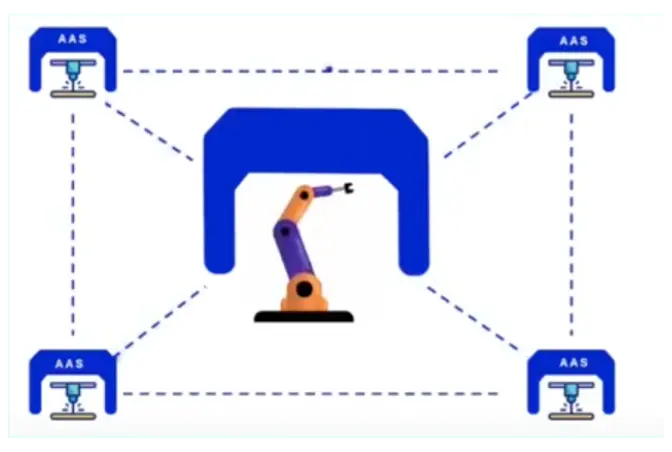
The Asset Administration Shell (AAS) is the standardized digital representation of industrial assets — the official digital twin standard for Industry 4.0. Defined by IEC 63278 and the Industrial Digital Twin Association (IDTA), the Asset Administration Shell provides a vendor-independent framework to describe machines, production systems, sensors, and industrial components throughout their entire lifecycle. AAS enables seamless interoperability across Industrial Internet of Things (IIoT) ecosystems by implementing RAMI 4.0 architecture principles. Each Asset Administration Shell is built with modular submodels — such as Nameplate, Technical Data, and Operational Data — that capture distinct asset characteristics. This ensures flexible integration with existing enterprise systems (ERP, MES, PLM) while maintaining full compliance with international standards.
Learn more in our comprehensive guide → What is Asset Administration Shell (AAS)?
Professional Asset Administration Shell Editor Features
Our Asset Administration Shell editor implements the complete AAS standard specification, providing enterprise-grade tools for digital twin creation, validation, and management.
Create & Modify AAS
Easily define new Asset Administration Shells or edit existing ones with an intuitive interface.
Submodel Management
Organize asset data into structured submodels, enabling better data utilization.
Standardized Data Exchange
Ensure compliance with Industry 4.0 standards
Interoperability
Facilitate seamless data integration across different platforms and industrial applications.
Digital Twin Implementation
Leverage the AAS to build comprehensive digital twins for predictive maintenance, optimization, and data analytics.
Security & Access Control
Manage user permissions with Attribute-Based Access Control (ABAC) to protect sensitive information.
AASs
Compliant Asset Administration Shell Standard Implementation for Industry 4.0
Transform your manufacturing operations with our standards-compliant Asset Administration Shell editor. Built on IDTA specifications and IEC 63278-1 standards, our AAS platform delivers enterprise-grade digital twin capabilities for seamless Industry 4.0 integration, OPC UA connectivity, and full RAMI 4.0 architecture support.
- Standards-Compliant AAS Editor: Full implementation of Asset Administration Shell standard specifications including IDTA submodel templates and IEC 63278 compliance.
- Digital Twin Validation: Automated validation ensures every AAS meets industry standards and RAMI 4.0 requirements.
- OPC UA Integration: Generate compliant OPC UA server configurations directly from AAS models for seamless industrial IoT connectivity.
Why Everyone Loves AIMEN Shell Toolkit
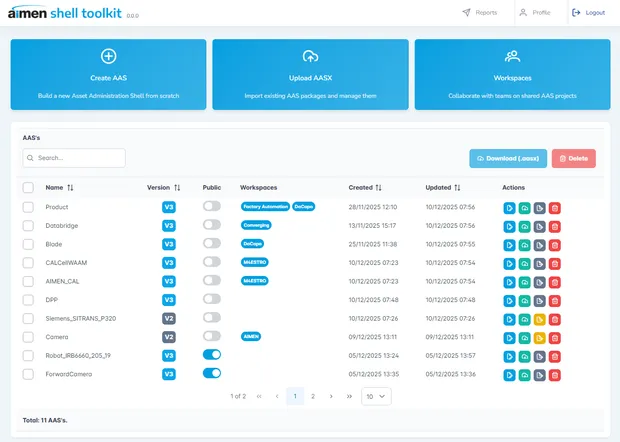
Our application simplifies the creation of an AAS (Asset Administration Shell) through an intuitive, step-by-step guided form.
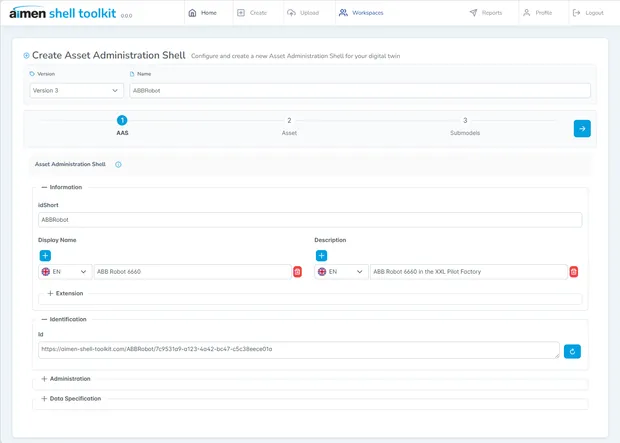
Create Standards-Compliant AAS Models
Our guided AAS creation wizard ensures complete standard compliance while minimizing complexity. Build production-ready AAS digital twins that meet IDTA specifications and IEC 63278 requirements from day one.
- Step-by-Step AAS Builder: Intuitive workflow guides you through AAS standard requirements and best practices.
- Real-Time Validation: Instant feedback ensures your AAS conforms to industry standards at every stage.
- Rapid Deployment: Generate production-ready AAS digital twins in minutes, not hours.
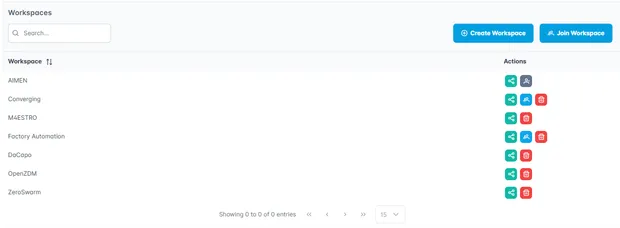
Collaborative AAS Management
Enable enterprise-wide digital twin collaboration with secure workspace management. Share AAS models across teams while maintaining granular access controls and version tracking for Industry 4.0 projects.
- Team Workspace Management: Collaborate on AAS development with role-based access control and audit trails.
- Permission Controls: Manage who can view, edit, or deploy AAS models with enterprise-grade security.
- User Administration: Streamline team management with centralized user administration for your AAS projects.
Asset Administration Shell Standard: Core Concepts & Implementation
Understanding the Asset Administration Shell standard is essential for successful Industry 4.0 implementation. Our AAS platform provides comprehensive support for all standard components including submodels, semantic IDs, and interoperability protocols defined by IDTA and IEC 63278 specifications.
The AAS standard provides the definitive framework for digital twin implementation in Industry 4.0. Each AAS encapsulates complete asset lifecycle information—from design specifications through operational data to maintenance records—enabling real-time monitoring, predictive analytics, and optimized asset management across manufacturing enterprises.
Built on IDTA specifications and IEC 63278 standards, the AAS standard ensures universal interoperability across heterogeneous manufacturing systems. This standardized approach eliminates vendor lock-in, enabling seamless integration between different equipment manufacturers, control systems, and enterprise software platforms within your Industry 4.0 ecosystem.
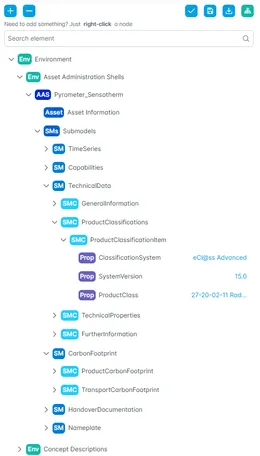
The AAS contains various submodels that represent different aspects of the asset, such as technical specifications, operational data, and maintenance records. These submodels enable comprehensive data management and facilitate data exchange between systems.
By adhering to standardized protocols and data formats, the AAS ensures that assets from different manufacturers can communicate and work together. This interoperability is essential for creating flexible and scalable industrial systems.
The AAS supports the entire lifecycle of an asset, from design and production to operation and maintenance. It provides a unified view of the asset's history and current state, enabling informed decision-making and efficient lifecycle management.t
The AAS bridges the gap between operational technology (OT) and information technology (IT) systems. It allows for seamless integration with enterprise systems, such as ERP and MES, facilitating data-driven decision-making and process optimization.
AAS Use Cases & Industrial Benefits
The Asset Administration Shell standard powers real-world Industry 4.0 transformations across manufacturing, logistics, and energy sectors. Here's how enterprises leverage AAS digital twins.
Enable plug-and-produce capabilities where new equipment automatically registers its capabilities via AAS. Dynamic production planning, autonomous order routing, and zero-defect manufacturing become achievable through standardized asset communication.
Continuously monitor operational parameters within AAS submodels for early anomaly detection. Reduce unplanned downtime, optimize maintenance scheduling based on real asset condition data, and lower total cost of ownership.
Achieve end-to-end traceability across value chains with standardized AAS data exchange. Automated supplier integration, real-time component visibility, and EU Digital Product Passport compliance are built on AAS foundations.
Use AAS digital twins for virtual commissioning of production systems before physical installation. Run what-if analyses, simulate process changes, and validate configurations — reducing deployment time and risk.
Track carbon footprint, material composition, and environmental data within AAS submodels. Enable Digital Product Passports for regulatory compliance (REACH, RoHS, WEEE) and circular economy optimization.
Bridge the gap between operational technology and IT systems. AAS integrates with OPC UA, MQTT, REST APIs, and enterprise platforms (ERP, MES) — enabling data-driven decision-making across your entire organization.
Built for Digital Product Passports
AIMEN Shell Toolkit gives manufacturers a solid, standards-based starting point for creating and managing Digital Product Passports. You can meet incoming EU requirements on product transparency, support a real circular economy, and do it all through digital twins that track a product from start to finish.
EU Compliance
The AAS structure lines up with upcoming EU regulations for DPPs, so your product data is already in the right format when you need to submit it.
Circular Economy
Store material details, disassembly steps, and end-of-life instructions inside the product's digital twin so that recyclers and refurbishers always have what they need.
Full Traceability
Track a product from raw material sourcing through manufacturing, everyday use, maintenance, and eventual disposal. Everything stays in one clear, auditable record.
Added Product Value
When buyers can verify a product's history, they trust it more. Transparent lifecycle data strengthens your market position and makes due-diligence checks much easier for everyone involved.
What is a Digital Product Passport?
A Digital Product Passport is a digital record that travels with a physical product its entire life. It brings together information about where the product came from, what it is made of, how much energy it uses, what certifications it holds, how it has been serviced, and how it should be disposed of. Anyone in the supply chain who needs that information can access it in one place.
The EU is gradually making DPPs mandatory across many product categories through its Ecodesign for Sustainable Products Regulation (ESPR), covering areas like batteries, textiles, electronics, and construction materials. Building DPPs on the AAS standard means you get a format that works across systems and vendors, rather than being locked into a single platform.
Standardised Format
AAS submodels give you a vendor-neutral structure for DPP data, so every party in the chain reads the same information without needing conversions or custom integrations.
Lifecycle Continuity
Data gathered during design, production, and service stays connected to the same digital twin. Nothing gets lost when the product changes hands.
Controlled Access
Regulators, recyclers, buyers, and service partners each see only the data they are allowed to view, managed through the AAS permission model.
Want to know how AIMEN Shell Toolkit can help you build your Digital Product Passport?
Get in Touch Try It FreeAIMEN Shell Toolkit vs Eclipse BaSyx
Both tools support the Asset Administration Shell standard, but they serve different purposes. Choose the right AAS solution for your Industry 4.0 needs.
AIMEN Shell Toolkit
A web-based, collaborative AAS editor and modelling platform designed for intuitive digital twin creation and team collaboration.
- Intuitive web-based AAS editor with guided forms
- Team collaboration with workspace management
- Real-time AAS validation and standards compliance
- OPC UA server configuration generation
- IDTA submodel template support
- Role-based access control (ABAC)
- No installation required — start creating immediately
Eclipse BaSyx
An open-source middleware platform focused on AAS runtime infrastructure, registries, and industrial system integration.
- AAS server and repository infrastructure
- AAS registry and discovery services
- REST API for AAS access and integration
- Open-source Java/Docker-based deployment
- Focus on industrial runtime environments
- Community-driven development
- Requires technical setup and configuration
Best together: Use AIMEN Shell Toolkit to create and model your AASs (Asset Administration Shells) with an intuitive editor, then deploy them to Eclipse BaSyx infrastructure for runtime operation. Both tools are complementary in a complete AAS ecosystem.
Asset Administration Shell Editor for Industry 4.0
The Asset Administration Shell editor for AAS modelling, digital twin creation, and Industry 4.0 compliance. Build standards-compliant AAS models with our enterprise-grade toolkit — featuring IDTA submodel templates, IEC 63278 validation, and OPC UA integration for smart manufacturing.
AAS Modelling
Visual editor with full AAS metamodel support for intuitive digital twin design.
IEC 63278 Validation
Automated compliance checks against international AAS standards.
IDTA Templates
Pre-built submodel templates from the Industrial Digital Twin Association.
OPC UA Integration
Generate OPC UA server configurations directly from your AAS models.
Asset Administration Shell
IEC 63278 Compliant · IDTA Certified
Submodel: Technical Data
IDTA 02003-1-2 Template
Submodel: Nameplate
IDTA 02006-2-0 Template
OPC UA Server Config
Auto-generated · Ready to deploy
Frequently Asked Questions
The Asset Administration Shell (AAS) is the standardized digital twin for Industry 4.0, defined by IEC 63278 and the Industrial Digital Twin Association (IDTA). It provides a vendor-independent framework to describe industrial assets — machines, sensors, and production systems — throughout their lifecycle. AAS uses modular submodels (Nameplate, Technical Data, Operational Data) to capture asset characteristics, enabling interoperability across IIoT ecosystems and seamless integration with enterprise systems (ERP, MES, PLM).
The AIMEN Shell Toolkit is a user-friendly application designed to simplify the creation and management of Asset Administration Shell (AAS). It provides tools for defining, organizing, and visualizing digital twins of physical assets, making it easy for users to bridge operational technology and information systems.
The AIMEN Shell Toolkit is built with an intuitive interface suitable for users of all levels. Whether you’re new to asset administration or experienced in digital twin technology, the editor’s design is accessible and efficient for everyone.
Our application allows you to create and share AASs within designated workspaces. You can invite team members to collaborate, control permissions, manage admin privileges, and remove inactive users to maintain a streamlined workspace.
Yes! The AIMEN Shell Toolkit allows you to generate OPC UA server configurations directly from your AAS models. This feature streamlines the integration of digital twins with industrial systems, making it easier to connect to various operational platforms.
Built-in data validation ensures that each AAS is configured correctly and complies with necessary standards. This feature minimizes errors and ensures that your AAS meets all required specifications for effective digital twin management.
IDTA submodel templates are standardized data structures defined by the Industrial Digital Twin Association for use within Asset Administration Shells. Templates like Nameplate (IDTA 02006), Technical Data (IDTA 02003), and Digital Nameplate (IDTA 02007) provide pre-defined schemas for common asset information. AIMEN Shell Toolkit includes built-in support for these templates, allowing you to create compliant AAS models quickly.
The Asset Administration Shell is formally standardized under IEC 63278, which defines the metamodel and API specifications. RAMI 4.0 (Reference Architecture Model for Industry 4.0) provides the architectural framework where AAS serves as the interoperability layer. Together, they enable vendor-independent digital twin implementations across manufacturing enterprises.
Absolutely. You can assign specific permissions for each AAS within a workspace, providing control over who can view or edit them. This flexibility allows for secure and efficient team collaboration.
You can invite new team members to join your workspace and assign admin privileges as needed. Additionally, unused or inactive users can be removed to maintain a streamlined, focused workspace.
Roadmap
Shaping the future of AAS. Explore our strategic milestones and upcoming features designed to enhance your AAS editing experience.
2024 Q2
AAS V2 Metamodel tools
2024 Q3
AIMENT Shell Toolkit application
2024 Q4
Landing page
2025 Q1
Blog
2025 Q4
AAS V3 Metamodel Implementation
2026 Q1
IDTA Submodel templates
2026 Q4
Basyx platform integration
2026 Q4
AAS V3.1 Metamodel Implementation
About Us
AIMEN is a multidisciplinary innovation and technology center specializing in R&D&I activities and providing technological services to industries in the fields of materials, advanced manufacturing processes, digitalization, and sustainability.




Experience
Who we are ?
As a proud partner developer within the Zero-SWARM initiative, we contribute to an ambitious project aimed at transforming European manufacturing. Zero-SWARM is a project with a total public private investment of almost €10 million launched on the 1st June 2022, aiming to accelerate the uptake of advanced 5G technologies by European manufacturing sector.
The project mission is to achieve climate neutral and digitized production via a multidisciplinary, human centric, objective oriented innovative approach resulting in technical solutions for open swarm framework, non-public 5G network, active information continuum and digital twin.
Team

AIMEN

AIMEN

AIMEN

AIMEN

AIMEN

AIMEN

AIMEN